The cost of care: how pet owners navigate emergency veterinary decisions
If outside the area, please call your nearest emergency vet.
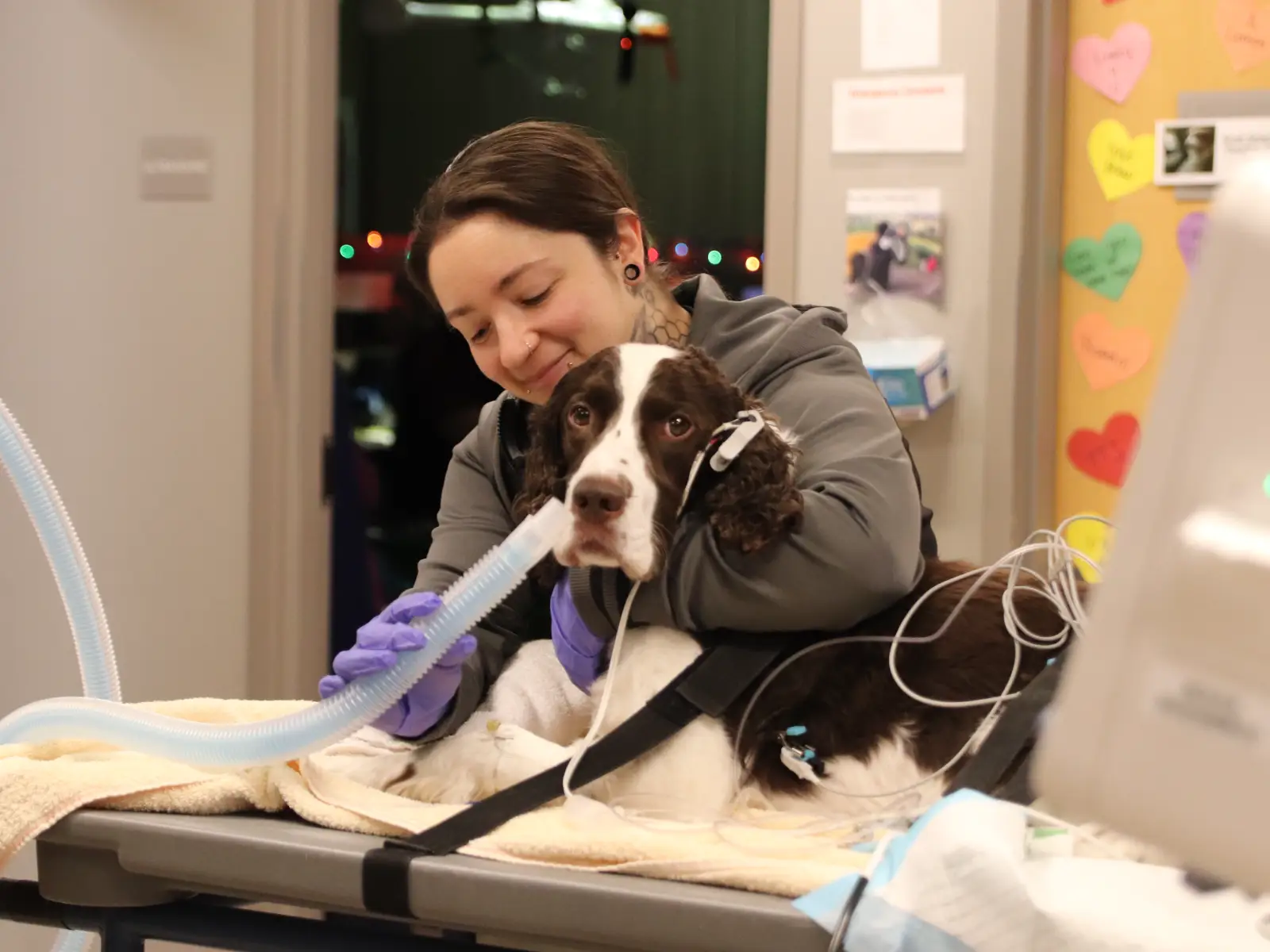
When a pet faces a medical emergency, pet owners are forced to make some of the hardest decisions of their lives, often within minutes. For many families, the experience brings into focus not only the cost of care, but also the weight of choosing the right path forward. Drawing on national survey data and localized insights from Colorado, this report examines how pet owners prepare for, respond to, and reflect on critical veterinary decisions when it matters most.
Key takeaways
- Over 8 in 10 pet owners are not fully financially prepared when their pet's emergency strikes.
- 57% of pet owners charge emergency vet bills to a credit card.
- Nearly 1 in 3 pet owners are still paying off debt from their pet's emergency care.
- 39% of pet owners have only minutes to make a life-or-death treatment decision for their pet.
- The vet's recommendation outranks cost by 31 percentage points as the top factor in emergency treatment decisions.
- 30% of pet owners delay getting emergency care for their pet because of cost concerns.
- 60% of pet owners who face an emergency experience at least one form of financial fallout (debt, delayed care, or a spending cap).
Financial readiness and the reality of emergency costs
Emergency veterinary care often arrives without warning, leaving many pet owners to navigate both medical and financial decisions at once.
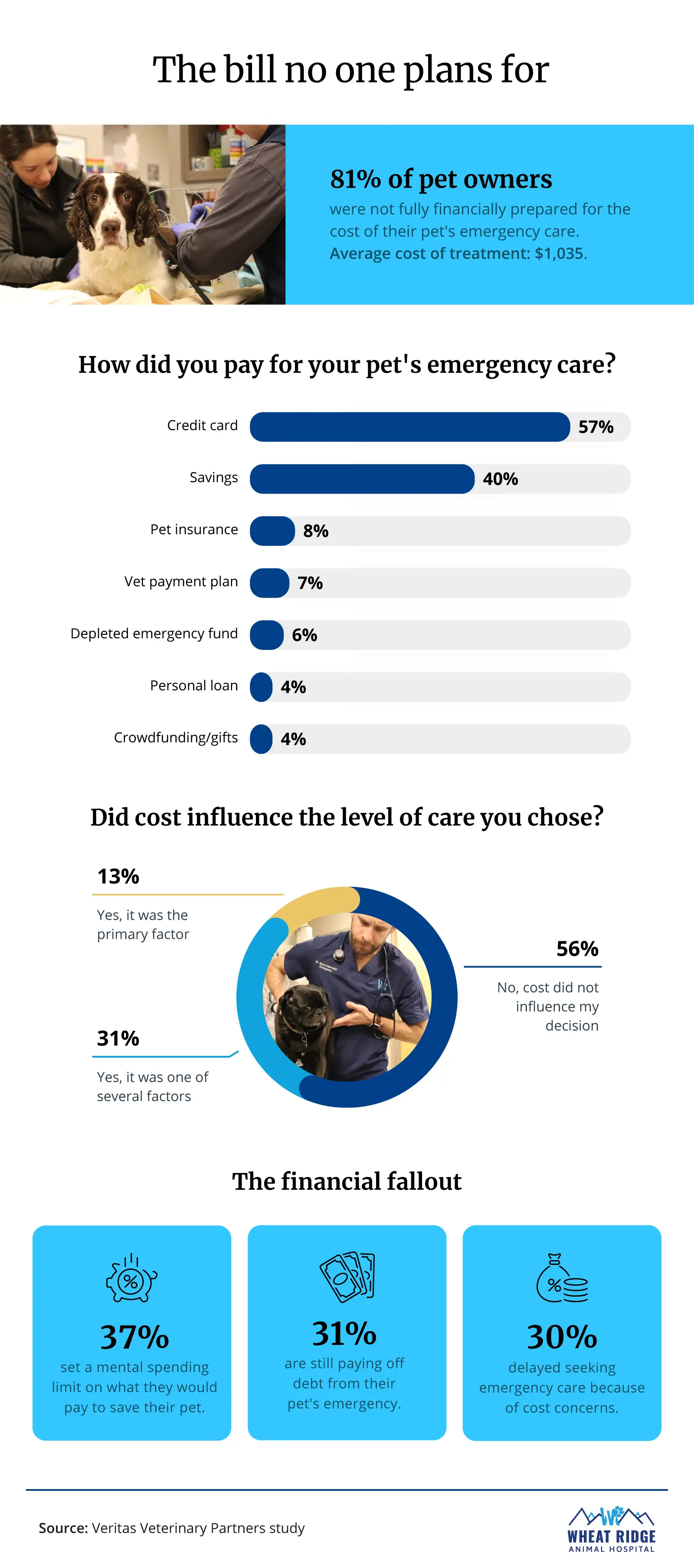
Only 19% of pet owners reported feeling very prepared for the cost of their pet’s emergency, while 49% felt somewhat prepared and 32% not at all prepared. Millennials (33%) and Gen X (31%) were the most likely to report being unprepared, while baby boomers reported higher levels of readiness, with 22% indicating they were not at all prepared.
The average cost of emergency treatment was $1,035, with slightly higher costs reported for cases that occurred one to three years ago compared to more recent incidents. Payment methods reflected the immediacy of these situations, with 57% of pet owners using credit cards and 40% relying on savings. Pet insurance (8%) and veterinary payment plans (7%) were used less frequently.
Despite financial strain, most pet owners prioritized care. Fifty-six percent said cost did not influence their treatment decision, while 31% described it as one of several factors and 13% as the primary factor. At the same time, 6 in 10 pet owners faced some form of financial consequences following their pet's emergency. Of those, 31% were still paying off debt, 30% delayed care due to cost concerns, and 37% set a mental limit on how much they were willing to spend.
Decision-making under pressure
In emergency settings, pet owners are often required to make complex medical decisions quickly, guided by both clinical input and personal circumstances.
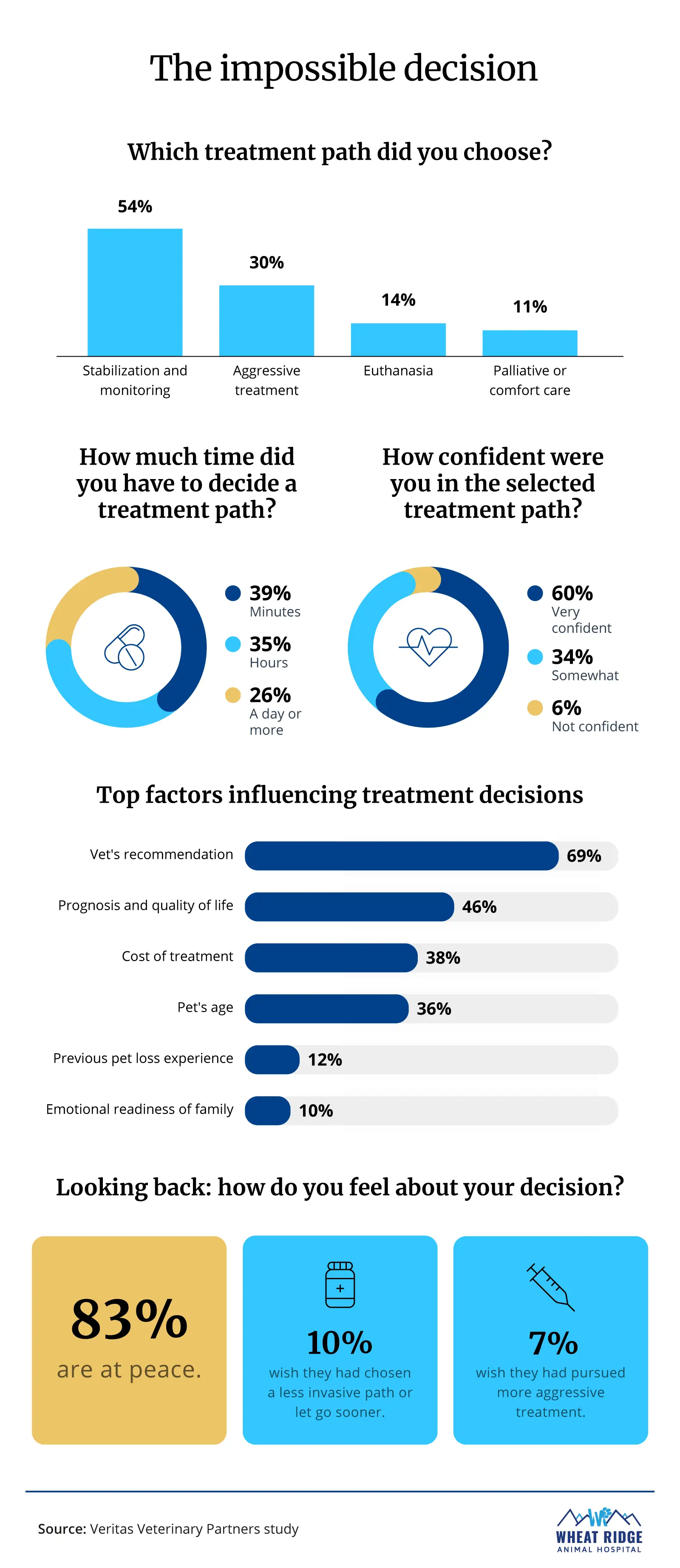
Stabilization and monitoring was the most common treatment path, selected by 54% of pet owners, followed by aggressive treatment (30%), euthanasia (14%), and palliative care (11%). Regardless of the path chosen, second-guessing occurred at similar rates; 11% of those who chose euthanasia wished they had pursued more treatment, while 11% of those who pursued aggressive care wished they had let go sooner.
Time constraints played a significant role. Thirty-nine percent of pet owners had only minutes to make a decision, while 35% had hours and 26% had a day or more. Even within these compressed timelines, 60% reported feeling very confident in their decision, and 83% ultimately felt at peace with the outcome.
Clinical guidance remained the most influential factor. Sixty-nine percent of pet owners cited their veterinarian’s recommendation as a key driver, compared to 38% who cited cost and 46% who considered prognosis or quality of life. The veterinarian’s input exceeded cost considerations by 31 percentage points, reinforcing its central role in decision-making across all demographics.
Access, insurance, and the role of proximity
Insurance and proximity to care both shape how pet owners approach emergency situations, though gaps remain in both areas.
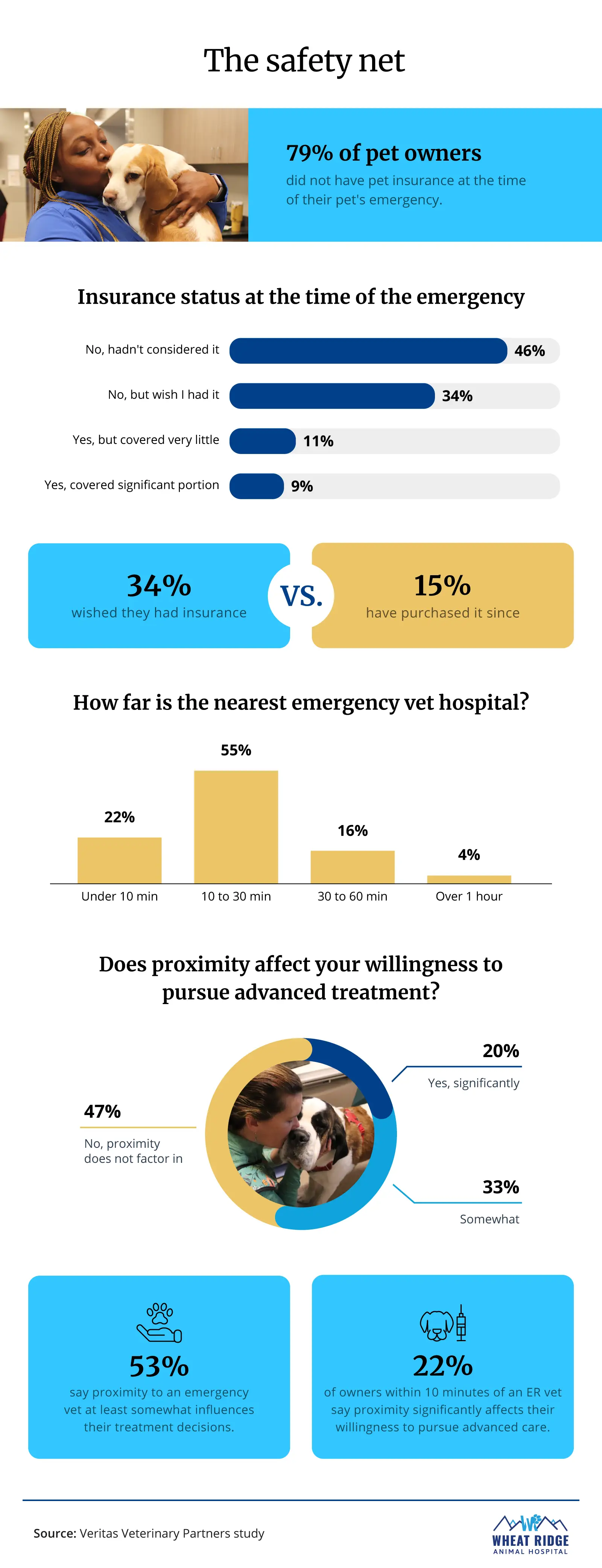
Seventy-nine percent of pet owners did not have pet insurance at the time of their emergency. Among them, 46% had not considered purchasing coverage, while 34% expressed regret after the fact. Even among those with insurance, only 9% said it covered a significant portion of costs.
Cost was the primary barrier to obtaining insurance, cited by 35% of respondents, followed by a perception that coverage was unnecessary (24%) or inadequate (10%). While 34% wished they had insurance during the emergency, only 15% had purchased it afterward.
Proximity to care also played a role in preparedness. Fifty-five percent of respondents lived within 10 to 30 minutes of an emergency veterinary hospital, while 22% were within 10 minutes. For many, location influenced decision-making, with 53% indicating that proximity to a specialty or emergency hospital affected their willingness to pursue advanced treatment.
Local data from Colorado reflects both higher costs and a greater tendency to pursue treatment, shaped in part by access to care.
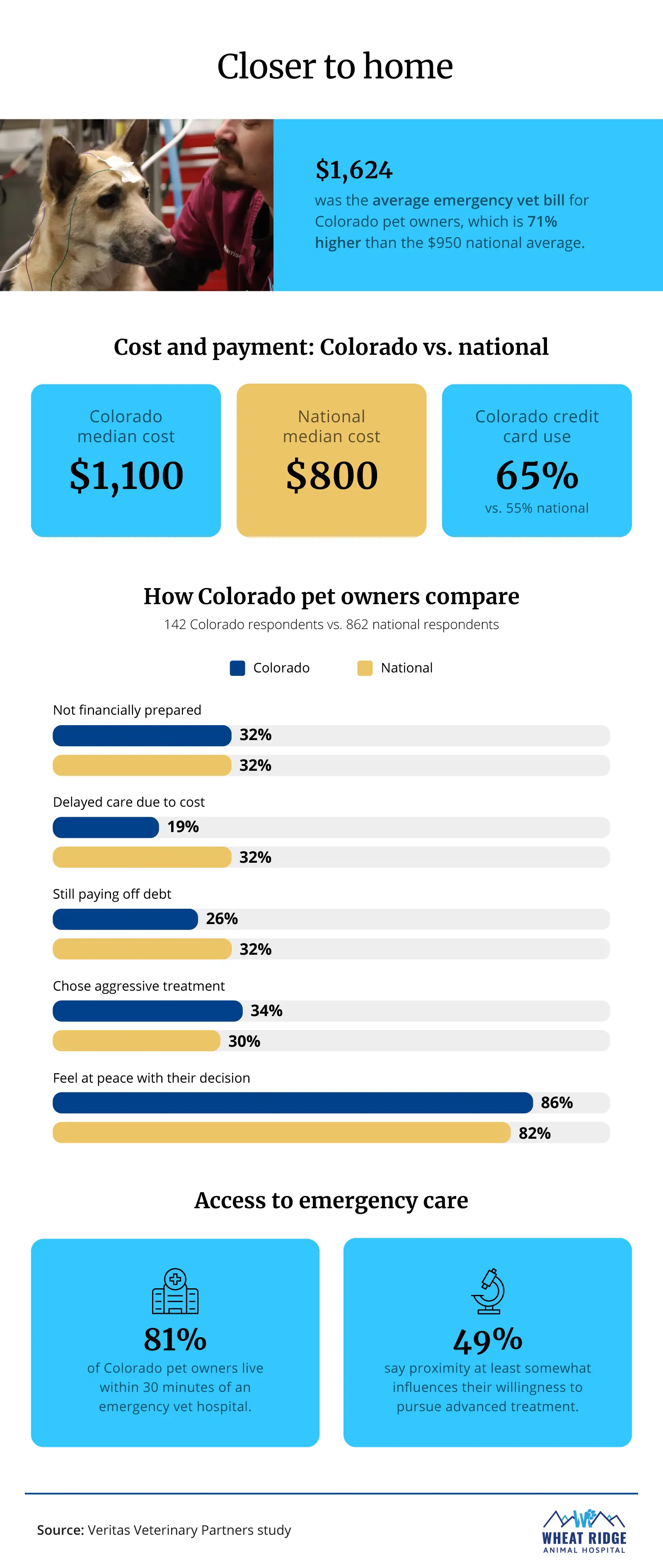
Pet owners in Colorado reported an average emergency care cost of $1,624, significantly higher than the national average. Despite this, only 19% delayed care due to cost concerns, compared to 32% nationally, and 26% reported ongoing debt related to treatment.
Treatment decisions also differed. Thirty-four percent of Colorado pet owners pursued aggressive treatment, compared to 30% nationally. A high proportion (86%) reported feeling at peace with their decision.
Access to care appears to support these outcomes. Eighty-one percent of Colorado respondents lived within 30 minutes of an emergency veterinary hospital, and 49% indicated that proximity influenced their willingness to pursue advanced treatment. While slightly lower than the national rate, this still reflects the importance of accessible care in shaping decision-making.
When preparation meets reality
Emergency veterinary care places pet owners at the intersection of emotion, urgency, and financial responsibility. While many enter these situations unprepared, the majority still prioritize care, guided by clinical expertise and a commitment to their pet’s wellbeing.
The findings suggest that preparation is not only financial but also about understanding options, building a relationship with trusted veterinary providers, and knowing where to turn in urgent moments. When time is limited and decisions carry lasting weight, access to experienced emergency and specialty care can make all the difference.
Methodology
For this study, we surveyed 1,004 pet owners across the U.S. about their experiences seeking emergency veterinary care for their pets. Among pet owners, 142 were Colorado residents, with 27 living in Denver.
Among respondents, 59% reported as women, 38% reported as men, and 2% reported as non-binary. Generationally, 7% of respondents reported as baby boomers, 24% reported as Gen X, 52% reported as millennials, and 17% reported as Gen Z.
About Wheat Ridge Animal Hospital (WRAH)
Wheat Ridge Animal Hospital provides comprehensive emergency and specialty veterinary care in Colorado. With a team of experienced clinicians and board-certified specialists, WRAH supports pets and their families through critical medical situations with a focus on advanced diagnostics, collaborative care, and practical, compassionate decision-making.
Fair use statement
This content is intended for noncommercial use only. If shared or referenced, please provide proper attribution and include a link back to Wheat Ridge Animal Hospital.
The information contained in the article is for informational purposes only and is not intended to take the place of the advice of a veterinarian.